Giardia: What Is It, How Is It Transmitted, and How Can We Treat It?
Updated: Jun 19
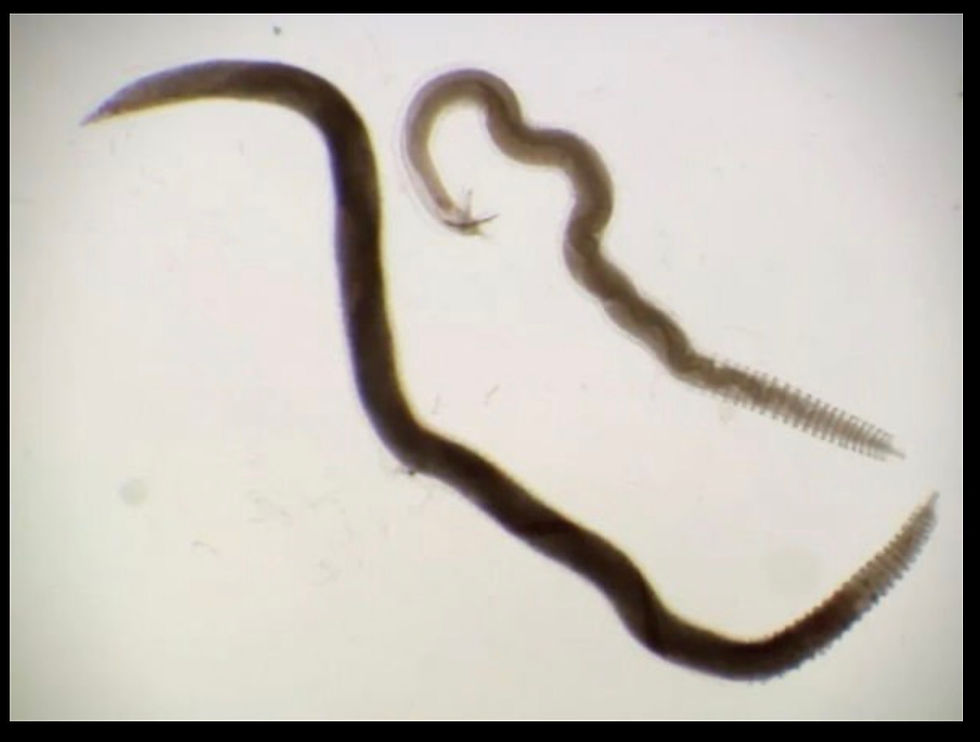
It is not a worm, bacteria, or virus! Giardiasis is an intestinal infection in humans and animals, caused by a microscopic protozoan parasite.
Giardia has two forms:
• A trophozoite that lives in the gut of infected animals
• A cystic stage that’s shed in the dog's stool
The cyst form can survive for several months in the environment ... especially in water or damp conditions. If your dog swallows the cyst, it enters his intestines. Once there, it transforms into the trophozoite form and feeds from your dog’s intestinal wall. Some trophozoites transform into the cystic form.
Statistics say 50% of puppies and younger dogs will suffer from Giardiasis in their lifetime! Giardia is very difficult to detect in a normal fecal test. Giardia is inconsistent when shedding; from ingestion, the cysts can take 5-12 days to show in a canine fecal sample and 5-16 days for a cat, so the fecal sample tested may not contain the cyst.
Giardiasis can cause diarrhea in animals and people. However, the majority of dogs infected with Giardia do not have diarrhea, vomiting, or any other signs of illness. Giardiasis can be transmitted by eating or sniffing the cysts from contaminated ground, grass, or by drinking contaminated water. Can your dog give you Giardia?
Technically, Giardia is a zoonotic disease, meaning different species can get it. So if your dog tests positive for Giardia, can you catch it from him?
Fortunately, research says it’s not that easy for Giardia to transfer between species because dogs and people get different types of Giardia.
If your dog has Giardia, just take reasonable precautions:
• Washing your hands regularly (especially after poop pick-up!)
• Cleaning your dog’s bedding, toys, food, and water bowls
• Cleaning household surfaces
• If you garden, wearing gloves to avoid contact with infected poop
• Keeping your environment dry (Giardia likes damp conditions)
If an animal is diagnosed, it could be very dangerous if passed on to people with a compromised immune system, such as those suffering from AIDS, cancer, or undergoing chemotherapy, so extra vigilance is required. If detected, a good chlorine bleach dilution should be used, and all bedding, toys, and bowls washed.
How to treat Giardiasis in dogs and puppies
The most common drug used to kill Giardia is called fenbendazole (Panacur). It is normally given daily for 6 days.
Another drug that may be prescribed is Metronidazole (Flagyl) but research has shown that this may no be effective - Metronidazole – AnimalBiome
Both of the above medications can have unwanted and sometimes long-lasting side effects. There are, however, natural methods that can be used to treat Giardia such as Grapefruit seed extract - Benefits of Grapefruit Seed Extract for Your Dog
If you are using grapefruit seed extract (GSE) to treat Giardia here is some information on recommended brands and dosages:
Higher Nature Citricidal - 1 drop per 1kg of bodyweight per day.
Nutribiotic Vegan - 1 drop per 1kg of bodyweight per day.
Nutribiotic Maximum - 1 drop per 2kg of bodyweight per day.
Add the GSE to a treat or food for 10 days then repeat the worm count 21 days after the last dose.
Higher Nature Citricidal stockists:
Nutribiotic Vegan stockists:
Nutribiotic Maximum stockists:
Other Natural Products: Giardia In Dogs: Causes, Symptoms & Treatment | Dogs Naturally Magazine
In conclusion:
In addition to testing your dogs regularly for intestinal worms and lungworms, if you are at all worried it is very simple to do a home Giardia test with a kit from Feclab Laboratories. The link to use for ALL their worm counting and Giardia kits is Dogs & Cats Archives - Feclab Laboratories and
you can use this code to benefit from a 10% member discount with this code NOBULL10
© E. J. Wass, written for No bull just natural health for dogs