Understanding Lungworms: Causes, Lifecycle, and Detection
Updated: Apr 9
I wanted to write a small blog about lungworms as it seems this is one we definitely get our knickers in a knot about! Joking aside, lungworm is NO joke and must be taken very seriously!
So what do we need to know about lungworms?
Lungworm also known as french heartworm, is transmitted by either eating a snail or slug that is infected with the lungworm larvae, the larvae can also be transmitted through the slime from slugs and snails in outdoor water bowls, puddles, and dog toys left outside, it can also be transmitted by a dog eating grass with an infected slug or snail slime. But we must remember not all slugs and snails carry lungworms.

Lungworm Lifecycle
Lungworm life cycle begins in the gut of the dog when the larvae are ingested, the larvae then migrate through the body to the lungs and heart where the adult worms lay eggs.
If you are regularly using a natural intestinal preventative it may potentially be less likely that the lungworm larvae will be able to migrate to the lungs and heart and become adult worms. It must be noted there is no know natural prevention for lungworm.
Lungworm: Lungworm is a parasitic worm that lives in the chambers of the heart
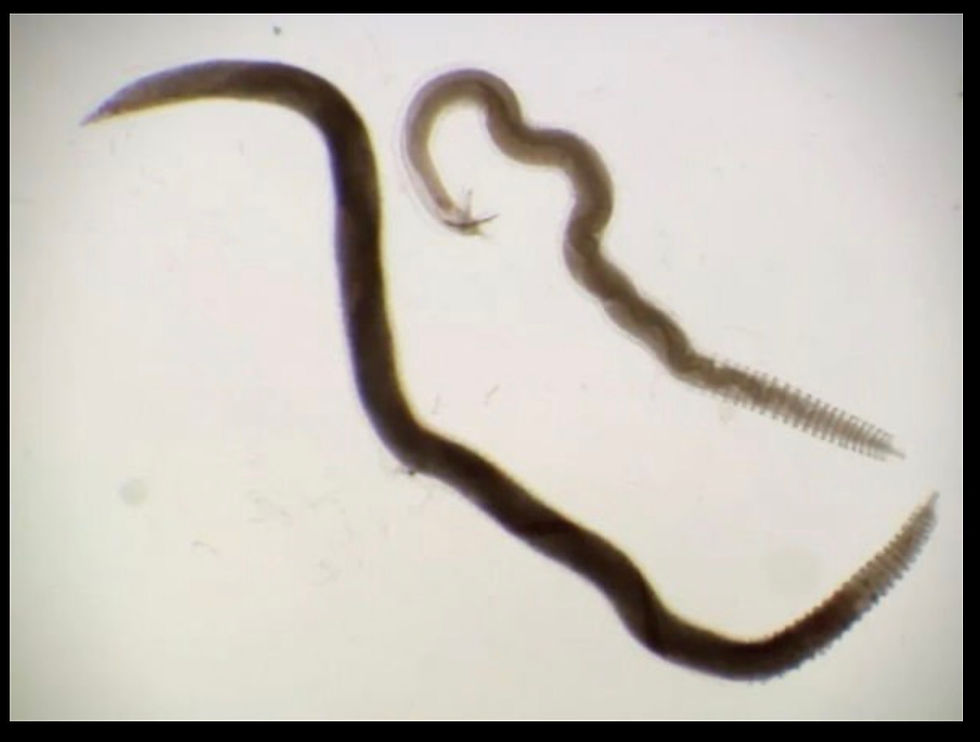
I personally do not routinely chemically treat my dog for lungworm even though we have a garden full of slugs and snails, instead, I use natural prevention for intestinal worms and do lungworm screening every 6-12 weeks to check. If there were any lungworm present then I would treat straight away. If you live in an area high in lungworm and are concerned you can test every 6wks for peace of mind. I have tested my own dog for lungworm for many years now and all of the tests have been clear, but please remember it is very important to keep up to date with lungworm screening.
If a lungworm burden is found we recommend you speak to your vet. A mild antiparasitic drug can be prescribed by a vet.
DOG lungworm: Panacur
FOX lungworm: Milbemax/Milpro
This is a great article from Vince the Vet - https://www.vincethevet.co.uk/blog/my-dog-has-tested-positive-for-lungworm---what-do-i-do
References;
©Karla Pearson written for NO BULL Just Natural Health for Dogs.